.svg)
.svg)
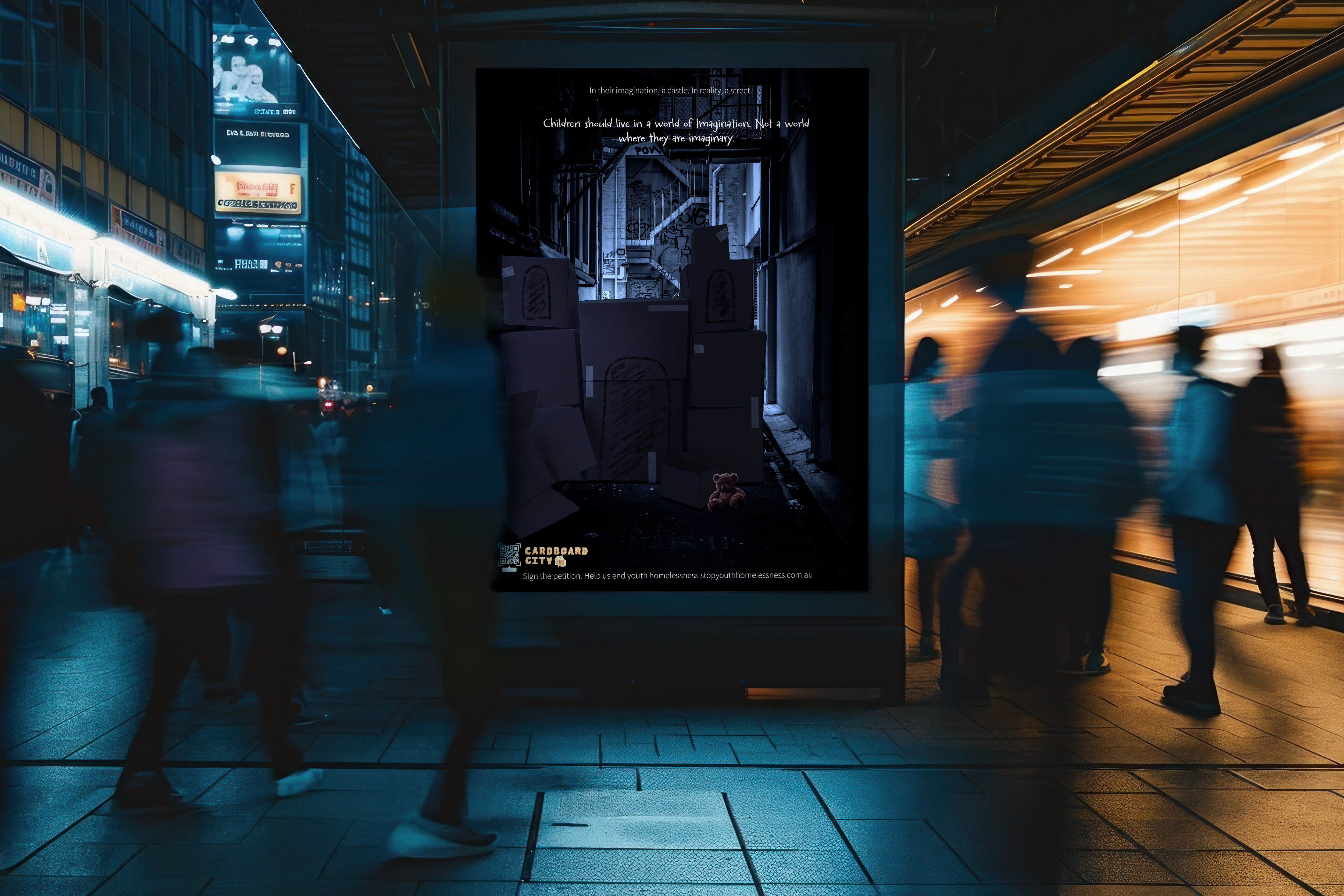
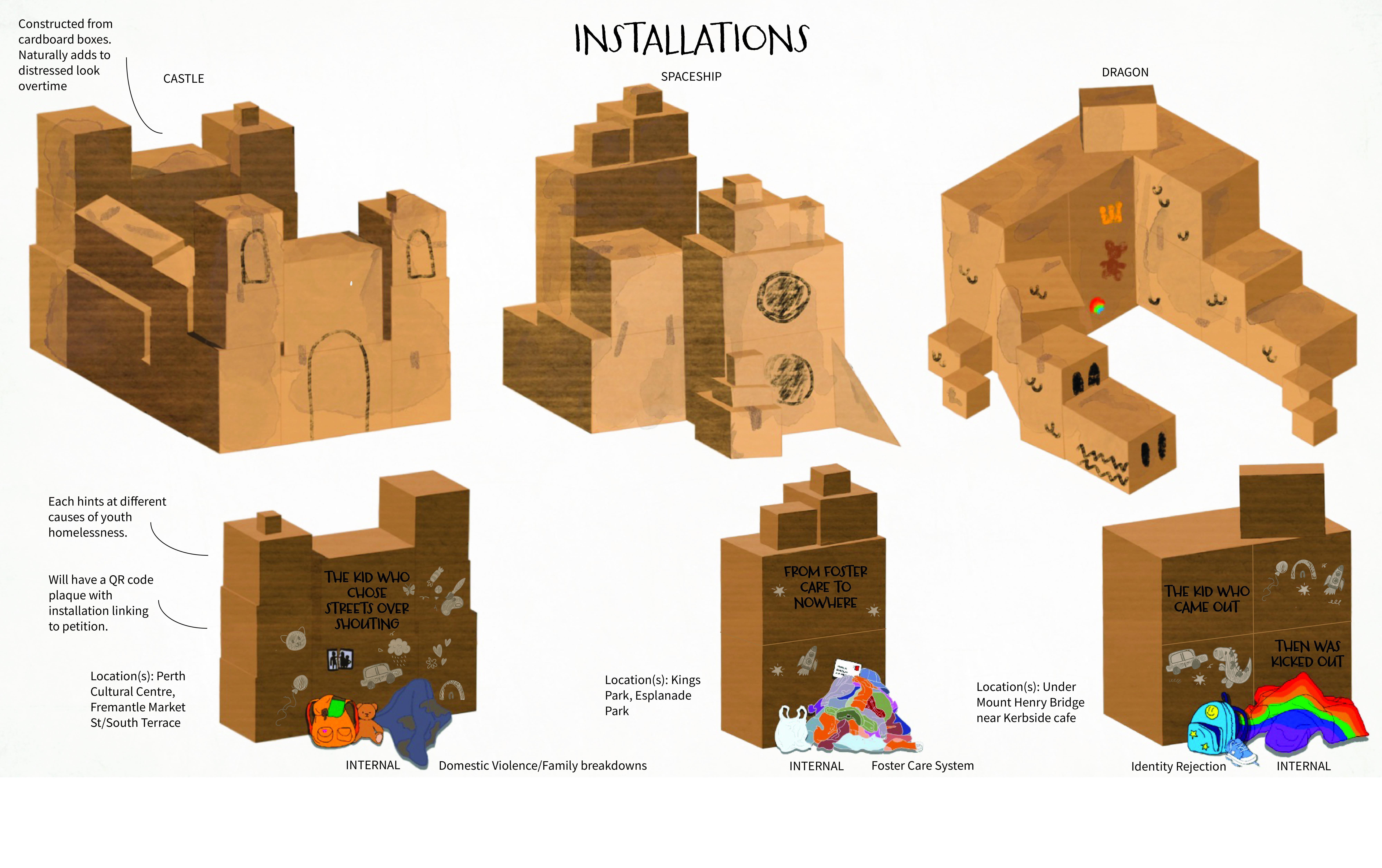
Youth homelessness is often hidden, not just physically, but socially. It’s misunderstood, ignored, or blamed on the young people themselves. In reality, many are pushed into homelessness by forces beyond their control: family violence, identity rejection, trauma, and the abrupt withdrawal of support from the foster care system when they turn 18.
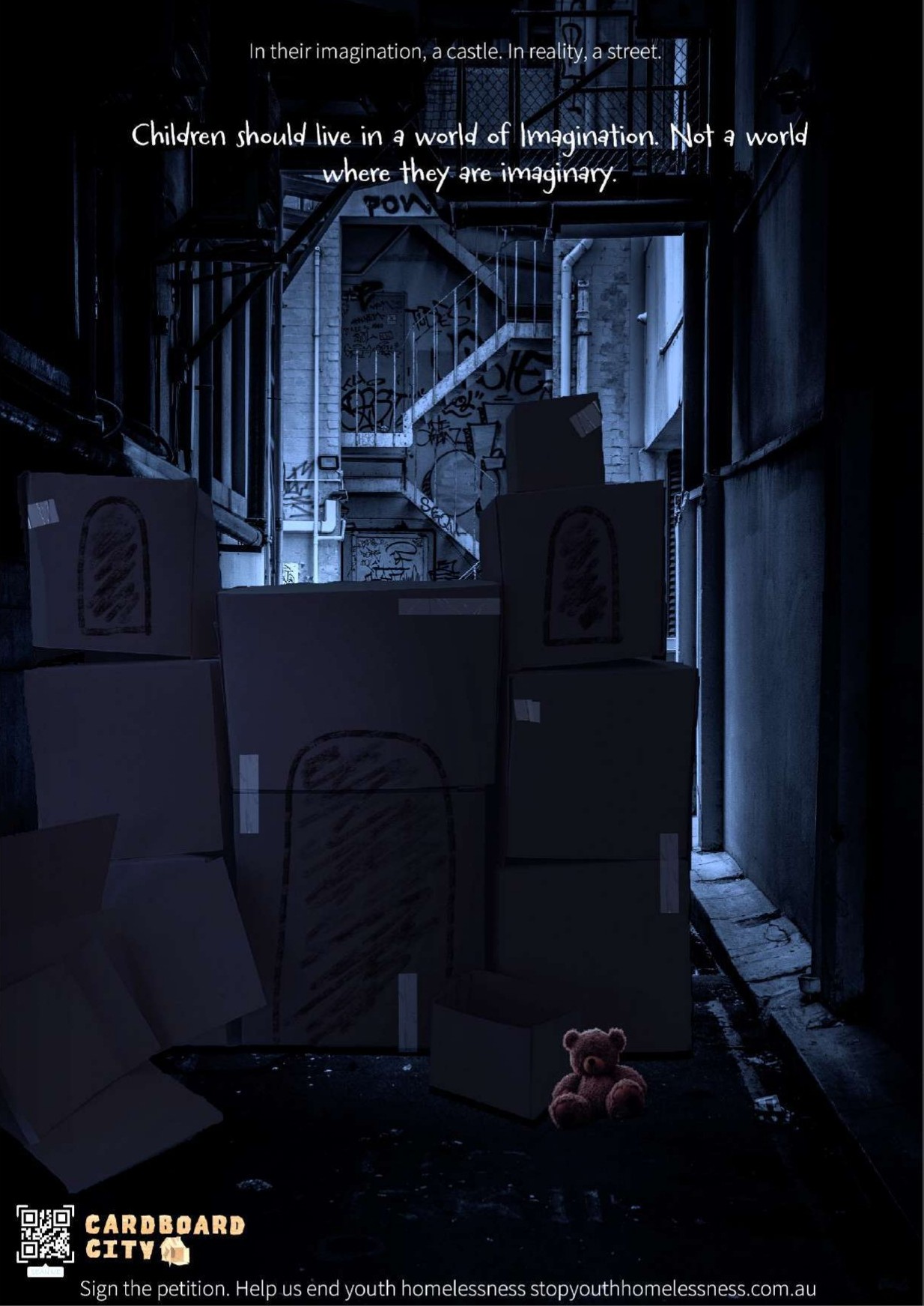
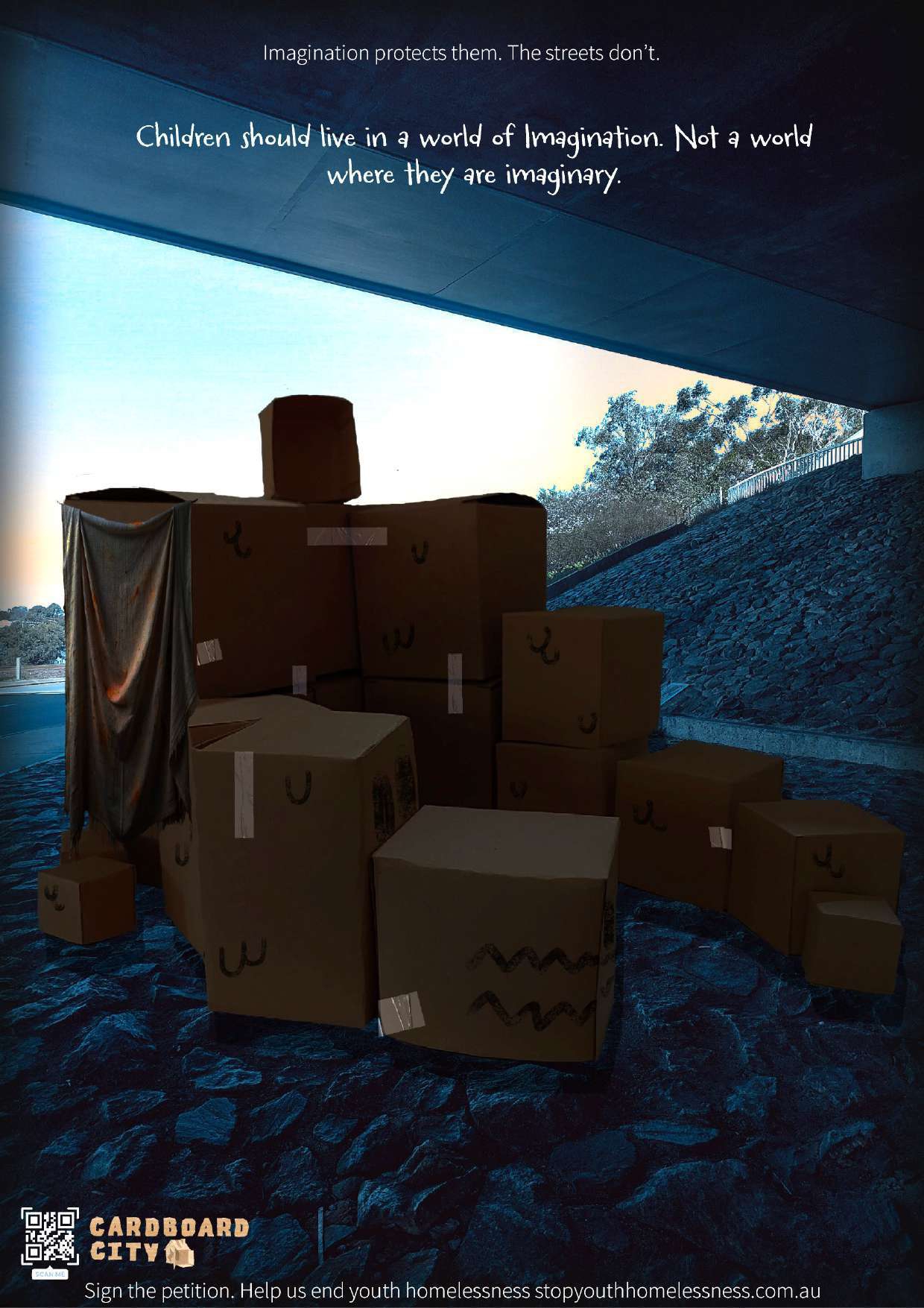
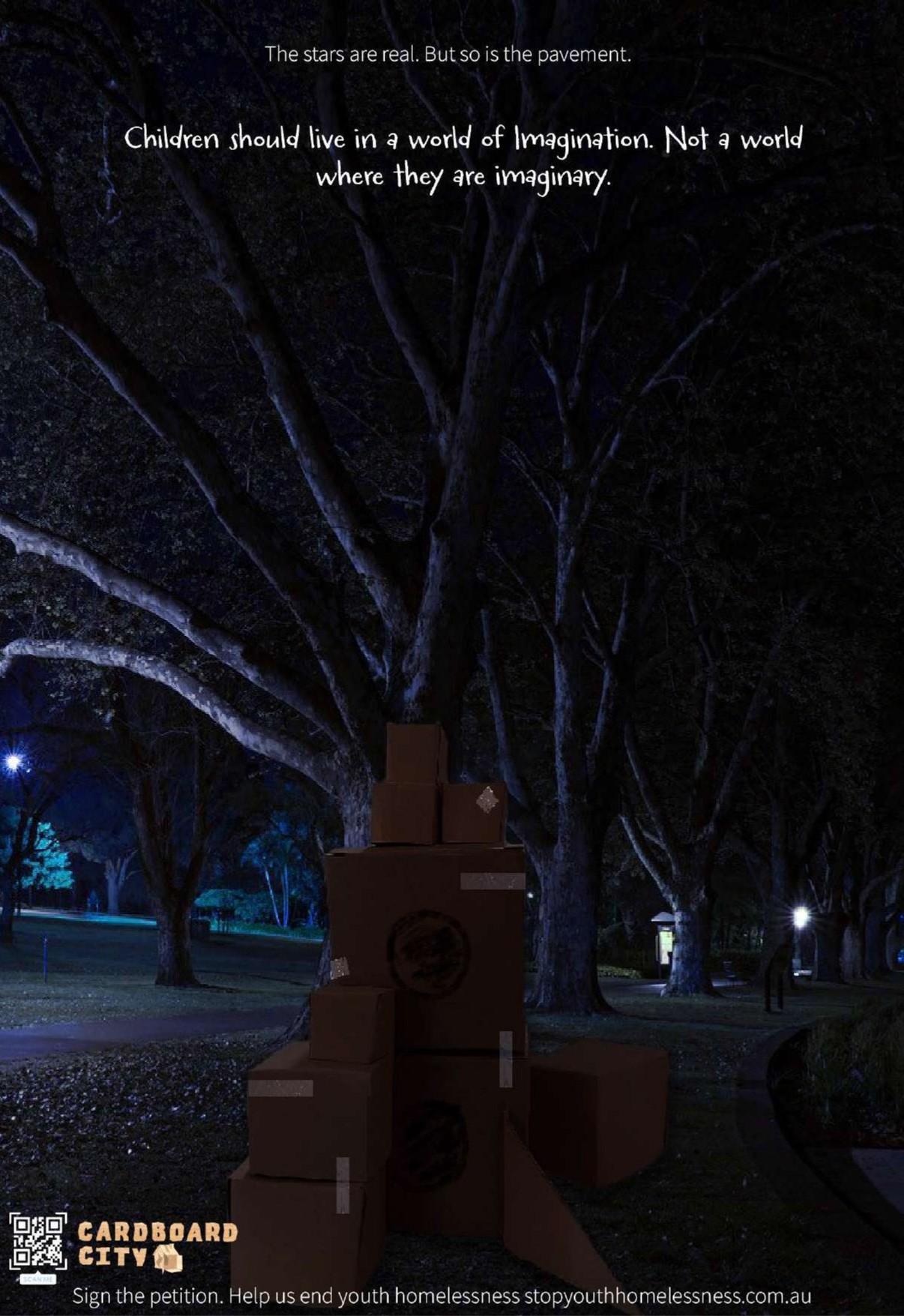
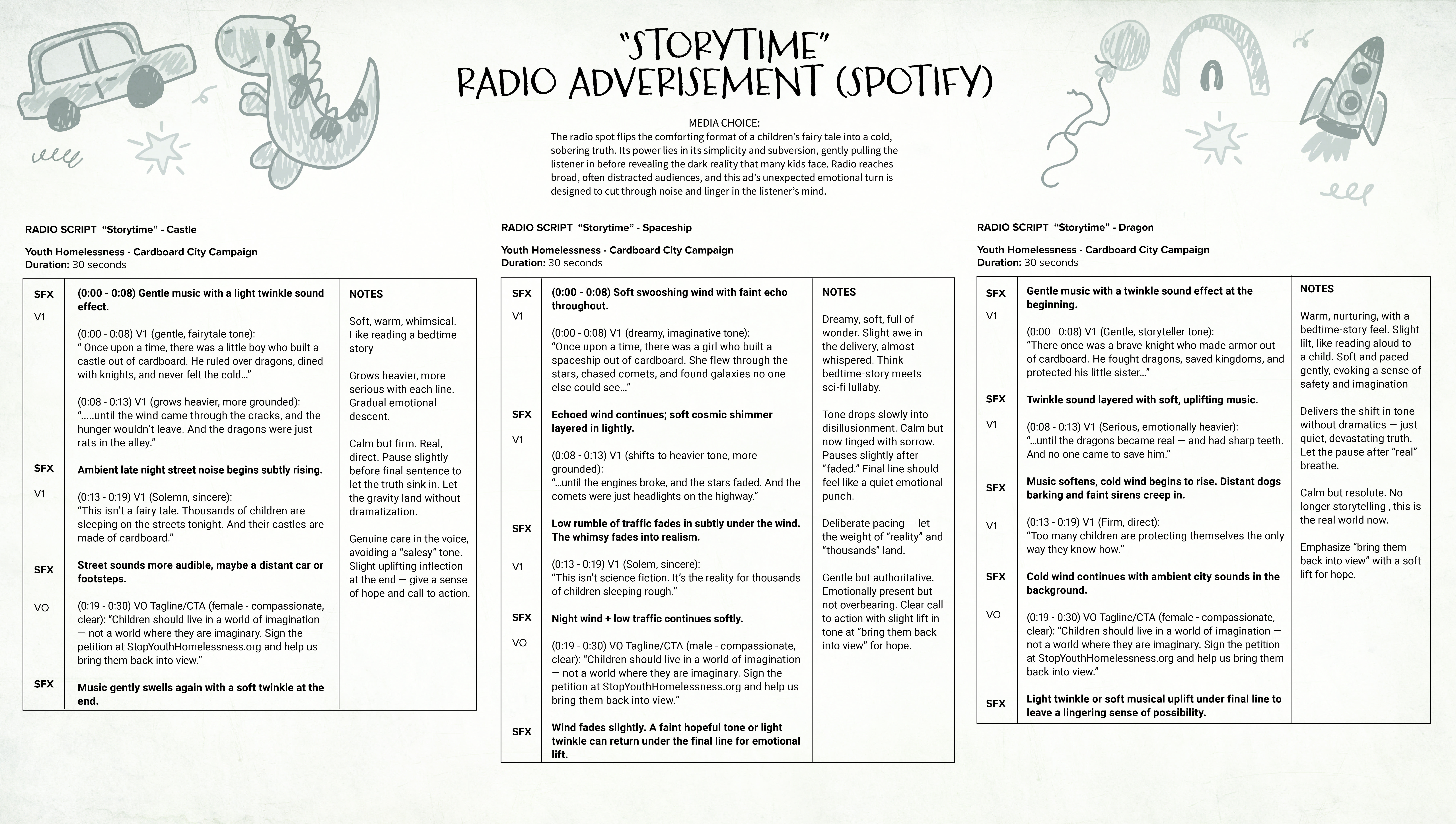
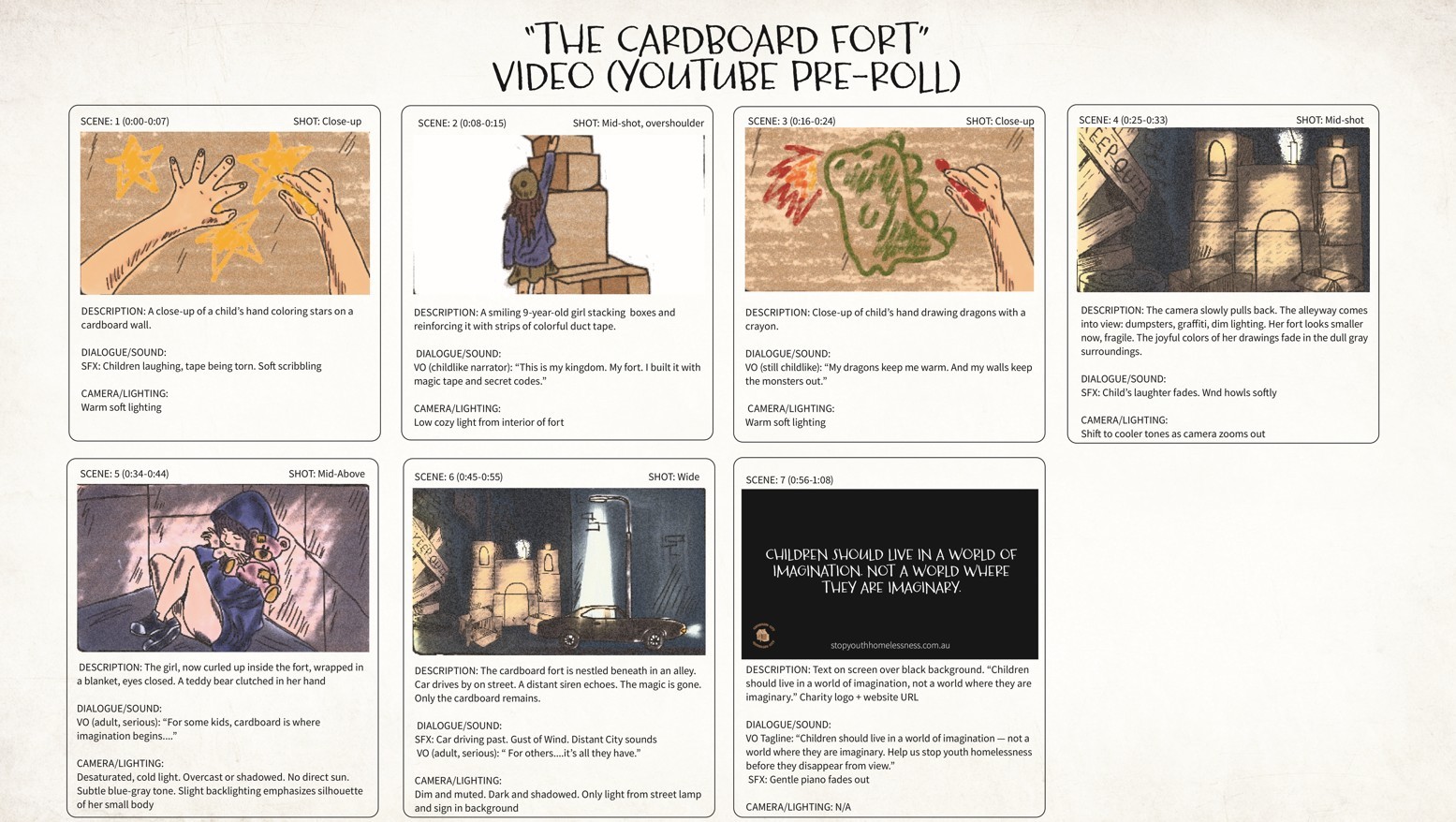
These stories are rarely seen or heard, and the stigma surrounding youth homelessness fuels silence, shame, and inaction. As kids, cardboard is a symbol of imagination, we build forts, spaceships, castles. But for thousands of young people, cardboard becomes a last resort: a barrier between them and the cold.
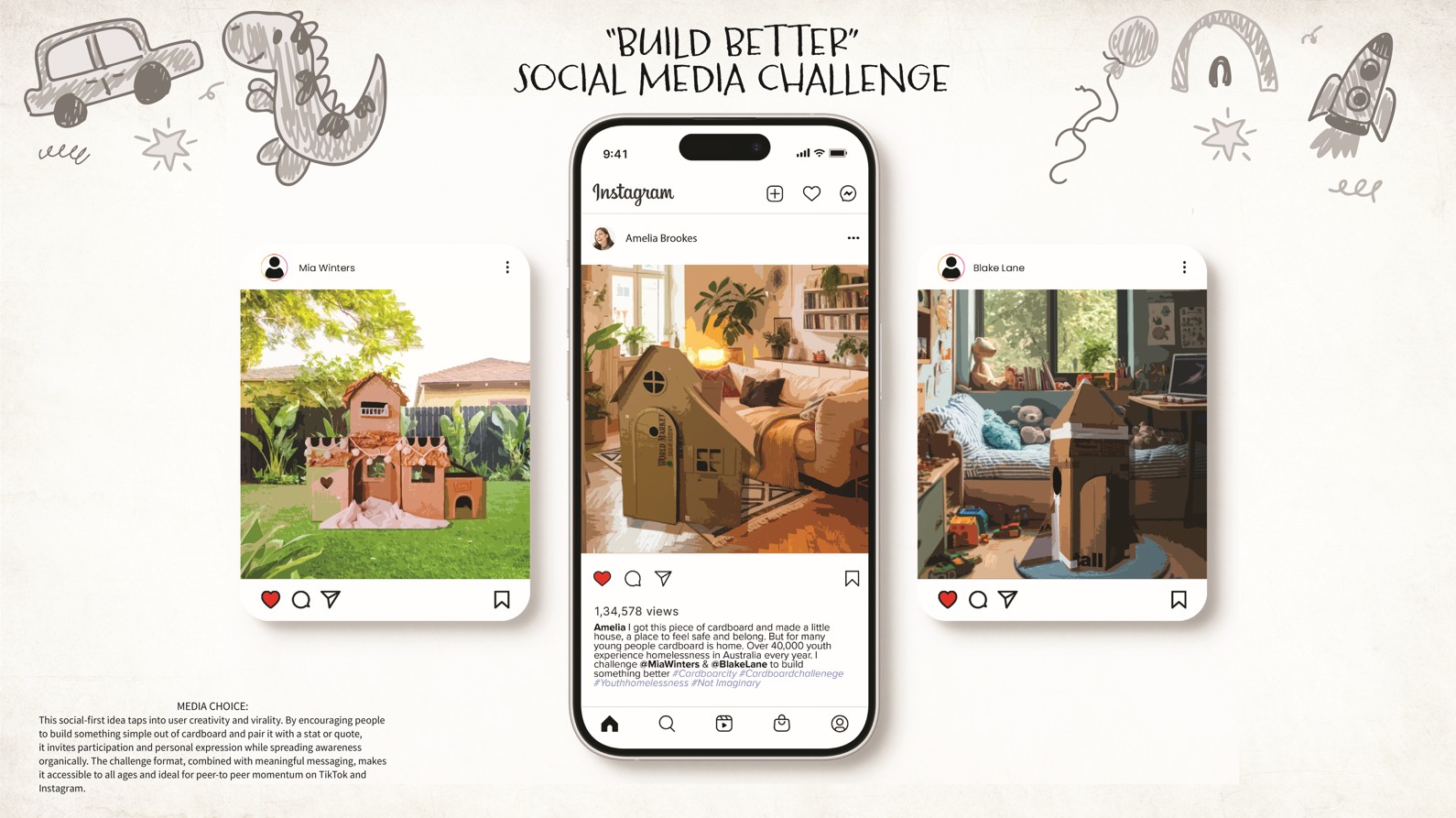
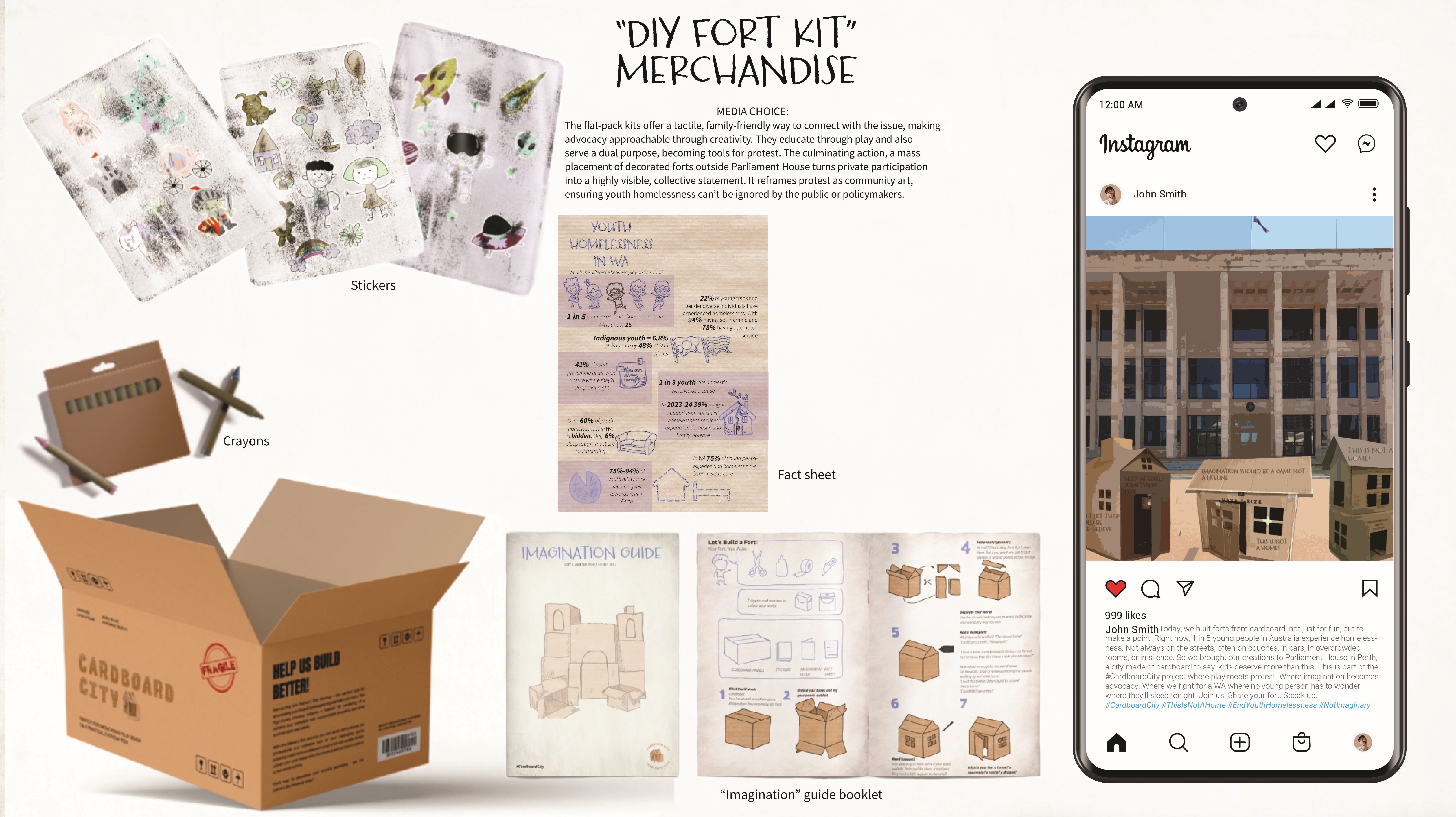
The campaign is built on this emotional contrast. “Cardboard City” transforms the playful into the powerful, drawing people in with childhood nostalgia, then confronting them with the harsh realities of youth homelessness. The metaphor becomes a bridge: between misunderstanding and empathy, invisibility and action. The campaign unfolds across multiple touchpoints to shift perception and drive direct action, encouraging the public to sign a petition demanding policy change and increased support for vulnerable youth.